I was born and bred in SW Washington State, where we might see a weeks worth of temps over 95 degrees during the summer. As a pilot car driver, I sometimes work in the midwest. This summer, I’ve found myself working in both the midwest and southwest.
After telling a few friends about my having to pilot super loads from Iowa to Arizona, I heard nothing but “Arizona’s hot, but it’s a dry heat.” What the hell?! Hot is hot, I’ve never cared if it was dry or humid. Boy, was I in for a steep learning curve!
Let’s start with Iowa. My first day in the South East corner of the state where the laydown yard for our wind turbine components were stored and along the Mississippi River the temperature was 85 degrees and I thought “that’s not so bad.” Then I got out of my nice cool car and tried to take a deep breath. The first feel of that humid and hot air took my breath away. It seemed my skin started to feel sticky within a few seconds. I could FEEL the sweat, starting to form on my neck and back.
That first experience with truly humid summer weather was completely overwhelming. For those of you who were born and raised there, I can hear you chuckling or sighing a huge, irritating sigh.
This was my first trip to the midwest during this type of weather. I had worked there in the winter and loved it. I was used to driving and living in cold weather. This was completely different than anything I had experienced. I tried to work on a doily I was crocheting and found the thread just wouldn’t glide through my fingers. My steel crochet hook stuck to my fingers and hands.
As the sun started to go down, a whole new bunch of experiences started to happen. Bugs that will eat the livin’ crap out of you in an instant! We have mosquitoes at home in Washington, but the ones that are in the midwest are on a different level. They’re tiny, don’t make a sound, and seem impervious to any type of bug spray. There is also some sort of “No-see-um” that will chew through any type of clothing right into your skin. After that first night of sleeping in my car with the windows down, I had dozens of bites all over me. Even my little road dog, Dakota, had bites all over the top of her head like little raised pimples.
Then I started seeing tiny little flashes of light that seemed to come off the stalks of corn in an adjacent field, which butted up against the parking lot of the truck stop I was parked in. Now I’ve heard stories from family members about Fire Flies or Lightening Bugs; whatever it is a person wants to call them. But to see them for real and the realization that those people who told you stories of collecting them in jars, pinching off their little butts to put on your fingernails or ear lobes as earrings were telling the truth! There really was such a thing as a bug that lit up; they did fly, and I was scared shitless of them. I just couldn’t wrap my head around an insect that really did this. I’m getting used to seeing them, but it’s taking me a while not to jump out of my skin when walking Dakota out after dark and these little streaks of light flash into the air.
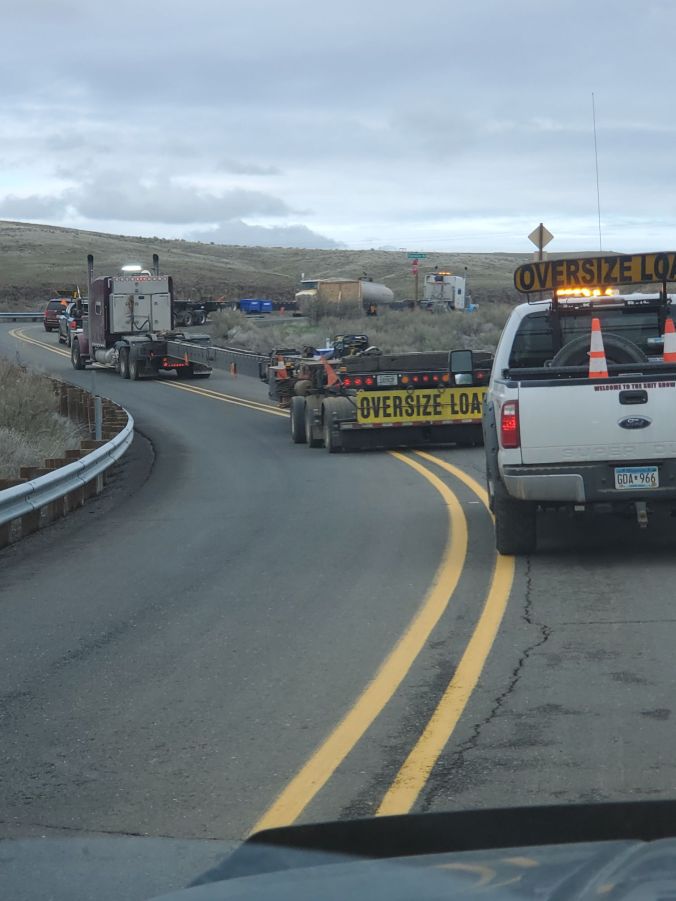
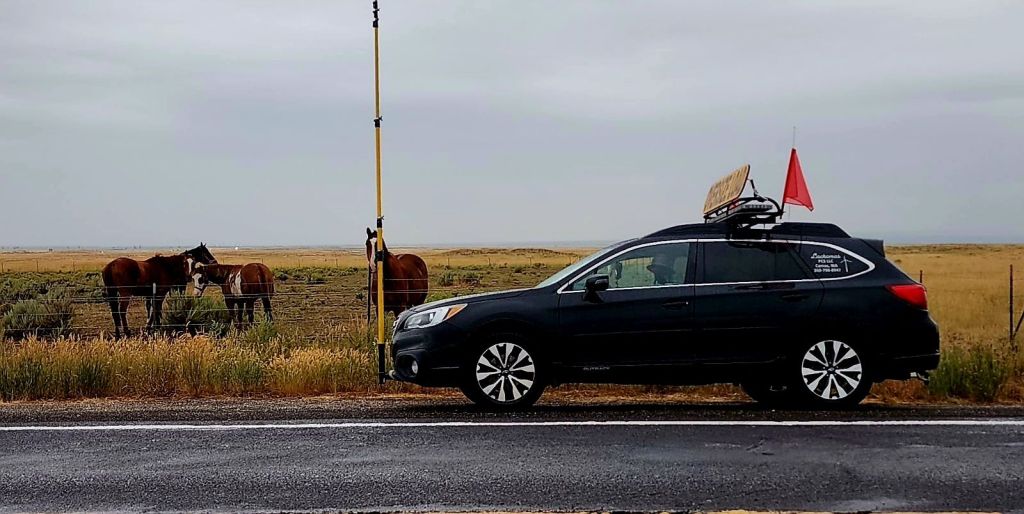
So let’s move on to Arizona. My first experience with Arizona was this: at about 95 degrees my 2016 Subaru outback decided “screw this, I don’t like this heat and I”m gonna make your A/C go all wonky on you.” Which it did. I had it on the lowest temp I could go and the fan all the way up. Nothin’ it was blowing hot air. If I sped up it would kind of work. But I’m a high pole car, running about 3/4 of a mile in front of my blade and have to pace my driver with the load behind me so that I’m not too far out for them to hear me or too close for them to maneuver around an obstacle in the road or vehicle pulled over on the road when I call it out on the cb radio. So this means my speed stays at about 55-60 miles an hour.
I finally decided to shut off my A/C and put the windows down. It was horrible, but we had air flow. After a while, Dakota had drank all the water in her bowl. She started drinking it out of my water cup and it went ok for a while. Then she started to really go down hill, laying on her side and panting hard. Our load with the blade and the truck is over 200 feet long. We don’t fit in most places and just parking on the side of the road is a safety hazzard to the motoring public. We had about an hour to get to our destination in Arizona, so I told our blade crew of 3 that we’d just push through and onto our laydown site.
We got to the laydown yard and I rushed Dakota to a friend of mine who was waiting with cool, wet towels and functioning A/C in her pick up. I made a call to my Subaru Guru in Washington, who referred me to a Subaru Guru in Phoenix. It was 113 degrees while we were on our way there. We finally arrived that night and found a nice comfy truck stop to stay in overnight. It was a tolerable night with the temperature going down to about 80- 85 degrees. For whatever reason, it didn’t seem that warm.
The next morning we dropped my car off at the home based shop of my Pheonix Subaru Guru mechanic and took off in my friends pick up. We found a gorgeous park and went for a walk to look at flower beds, the small lake with fountains in the middle of it and for Dakota to run around. I realized there wasn’t the hot and sticky feeling I’d experienced in the midwest. My skin wasn’t soaking with sweat. It was very hot at around 10am. I think it was upwards of 90 degrees, but it honestly didn’t feel that hot. I just can’t explain it, I know it wasn’t just me, my friend mentioned it too. As we were looking at flowers growing in outdoor flower beds that I can only grow in my house where they can sit in a sunny window; we also realized we hadn’t been chewed up by bugs overnight. Not a single bug bite! We slept in peace all night with our windows all the way down too!
The only real bug I saw were huge bumble bees flying unbievabley slow between flowers in the grass of the park. We saw warning signs of scorpions and rattlesnakes, but thankfully, we didn’t see any of those.
We spent most of the day in the Pheonix heat, but it seemed like I adapted to it pretty quick. Weird huh? It was about 105 dgrees, but with out the added sweatiness of humid heat it was bearable. I picked my car up in the late afternoon with working A/C and we left town about 5ish to head back north to Iowa for another load.
I have to say I know exactly what people are talking about now when I hear them say, “it’s a dry heat” when talking about the southwest united states. There is truly a difference between humid heat and dry heat. After being in both with in such a short period of time, I have to go with the dry heat of the southwest. For me, it isn’t as miserable as the humid heat we experienced in the midwest. Even though I live in the cooler climate of the Pacific Northwest, I found that I adapted to the dry heat of the southwest much better than the hot and humid climate in the midwest.
 Miss Sarah Etc.